
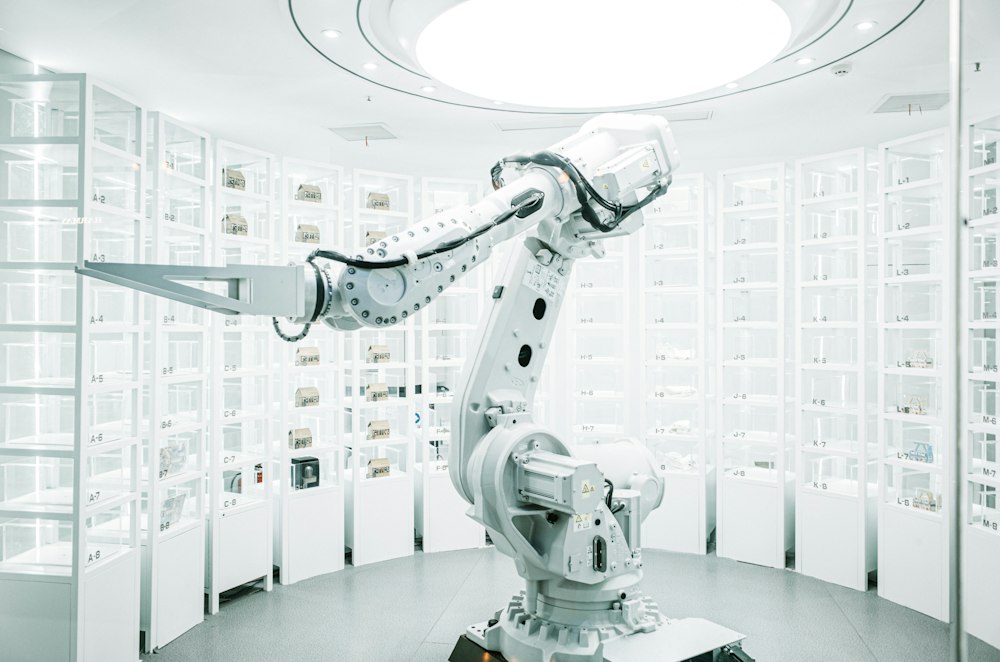
 With the rapid development of artificial intelligence, its applications in medicine are becoming increasingly widespread. Medical models are one area in which artificial intelligence plays an important role.
I. Applications of Artificial Intelligence in Medical Model Development
- AI-Powered Medical Model Design
Artificial intelligence can use technologies such as deep learning and image processing to extract useful information from medical imaging data and support intelligent medical model design. This enables the rapid creation of medical models that replicate a patient’s lesion, providing physicians with more accurate diagnostic and treatment options.
- Development of a Medical Model Database
Artificial intelligence can be combined with big data, machine learning, and other technologies to create a medical model database. This database can contain various types of medical models, including anatomical models of different parts of the human body, pathological models, and treatment models. Physicians can use the database to quickly locate and compare medical models, enabling them to develop more effective treatment plans.
- Personalized Medical Model Customization
Artificial intelligence can use information such as a patient's medical imaging data and treatment plan to create personalized medical models. These models can accurately represent the location of the patient's lesions, surgical approaches, and other features, providing clinicians with more specific support for surgical simulation and rehabilitation training.
II. Future Development Trends
- Highly Realistic Medical Models
In the future, artificial intelligence will place even greater emphasis on the accuracy and realism of medical models. More advanced technologies, including image processing and 3D printing, can be used to produce more lifelike, three-dimensional medical models, giving clinicians more intuitive and specific support for diagnosis and treatment planning.
- Intelligent Surgical Navigation Systems
Artificial intelligence can be integrated with surgical navigation systems to enable intelligent surgical navigation. Using information from medical models and patient imaging data, these systems can accurately identify the surgical site and pathway, improving surgical precision and success rates.
- Personalized Rehabilitation Training Plans
Artificial intelligence can develop personalized rehabilitation programs based on information such as a patient’s rehabilitation needs and physical condition. These programs can be presented through medical models and rehabilitation devices, providing patients with more evidence-based and effective rehabilitation support.
In summary, artificial intelligence has enormous potential in the medical modeling field. As technology continues to advance and its areas of application expand, artificial intelligence is expected to play an increasingly important role in medical modeling and make a greater contribution to progress across the healthcare industry.